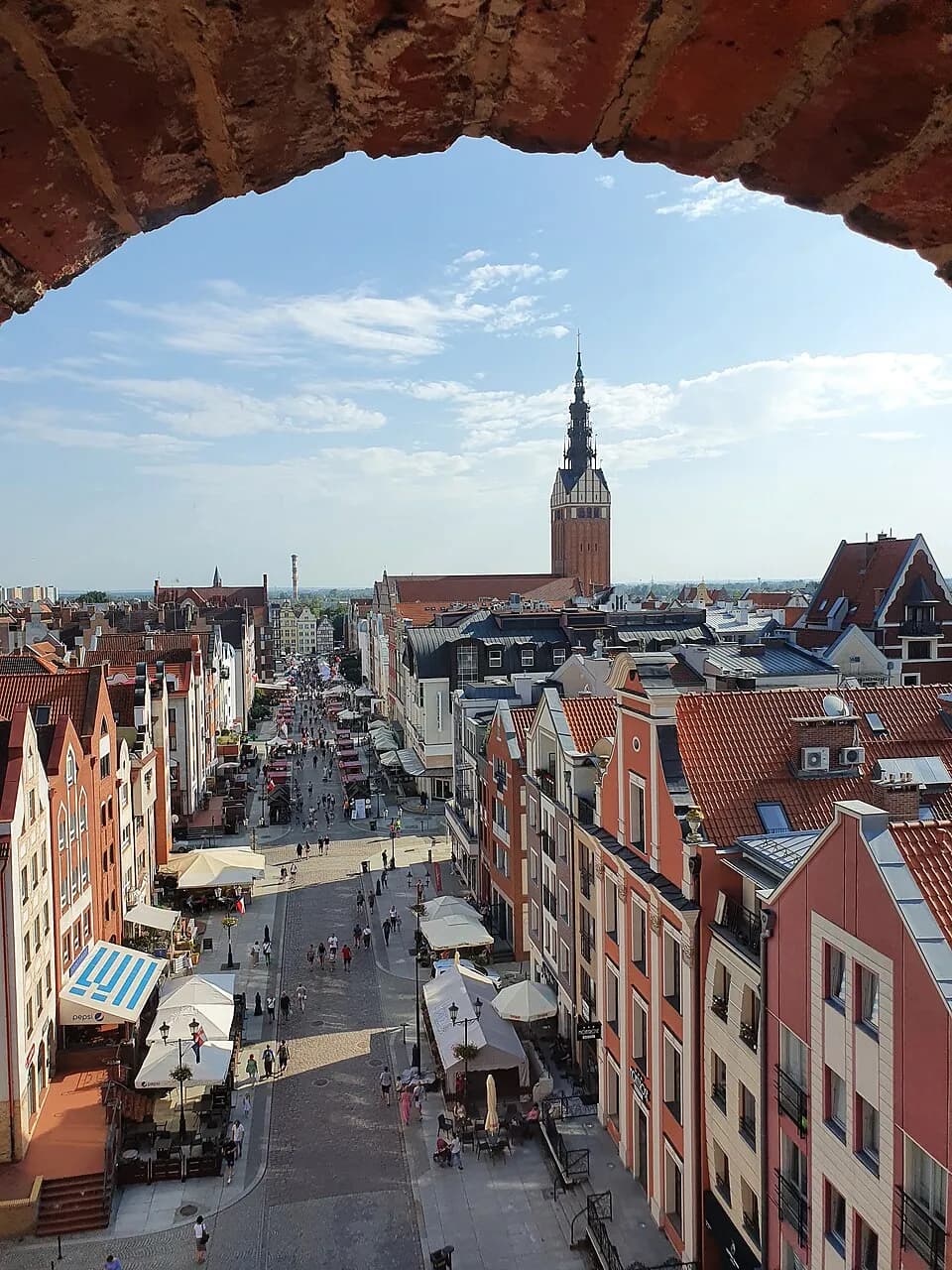
Located in northern Poland near the Vistula Lagoon, Elbląg is a city shaped by centuries of maritime trade, changing borders and remarkable reconstruction.
Founded by the Teutonic Knights in the 13th century, the city developed into an important port and commercial centre. Over time, Elbląg became connected with the wider Baltic trading network, survived dramatic wartime destruction and achieved one of Poland’s most distinctive urban reconstruction projects.
Today, Elbląg’s identity is defined by the relationship between its medieval heritage, waterways and the determination of generations who rebuilt the city.
From Teutonic Foundation to Medieval Trading Centre
Elbląg was established in 1237 by the Teutonic Knights near the site of an earlier settlement. Its location close to the Baltic Sea and access to waterways made it strategically valuable from the beginning.
The city quickly developed as a trading port and became a member of the Hanseatic League, the powerful network of European merchant cities that connected markets across northern Europe.
Through its harbour and river connections, Elbląg participated in regional and international trade, including commercial links with England and other European partners. For centuries, trade remained central to the city’s prosperity.
A City Shaped by Water and Commerce
Elbląg’s development has always been closely connected with its waterways.
The city’s position near the Vistula Lagoon and its links to surrounding regions supported shipping, manufacturing and commerce. The Elbląg Canal, completed in the 19th century, became one of the most remarkable engineering achievements in the region.
The canal connects waterways across a challenging landscape, using a unique system of inclined planes, where boats are transported over land on special platforms to overcome differences in elevation.
The Elbląg Canal remains one of Poland’s most important examples of historic engineering and continues to attract visitors interested in technology, history and tourism.
Wartime Destruction and the Loss of the Old Town
The Second World War brought a devastating change to Elbląg.
Heavy fighting and bombing destroyed a large part of the city, including much of the historic Old Town. Many medieval and Renaissance buildings were lost, leaving the traditional urban landscape almost completely destroyed.
After 1945, Elbląg became part of Poland, and the city underwent major demographic and political changes. For many decades, the Old Town remained largely undeveloped, with the ruins gradually disappearing from the city landscape.
Rebuilding Elbląg’s “Youngest Old Town”
A new chapter began in 1991 when reconstruction of the Old Town started.
Rather than simply rebuilding historic buildings exactly as they had existed, planners followed a unique approach known as “retrowersja” (retroversion). This method used archaeological discoveries, historical research and the original street layout as a foundation while allowing modern interpretations of historic architecture.
The result is one of Poland’s most distinctive urban renewal projects.
Today, Elbląg’s Old Town combines reconstructed historic-style buildings with contemporary elements, creating a neighbourhood that reflects both memory and modern life.
Because much of the area was rebuilt in recent decades, it is often described as Poland’s “youngest Old Town”.
Heritage, Community and Modern Elbląg
Elbląg’s history is not only preserved through buildings but also through the identity of its residents.
The city’s heritage reflects many layers: Teutonic foundations, Baltic trade connections, Hanseatic influence, wartime destruction and post-war rebuilding.
The Elbląg Canal continues to represent the city’s relationship with innovation and engineering, while the reconstructed Old Town demonstrates how communities can restore historic spaces while adapting them for future generations.
The canal is currently included on Poland’s tentative list for UNESCO World Heritage consideration, reflecting its recognised historical and engineering importance.
Elbląg Today: A City Looking Forward
Modern Elbląg combines cultural tourism, local traditions and economic development.
Visitors come to explore its reconstructed Old Town, waterfront areas and connection to the surrounding waterways, while residents continue to build on the city’s long history of adaptation.
Elbląg’s story is one of resilience: a city that lost much of its historic centre but created a new chapter through research, planning and community effort.
Elbląg’s history reflects the wider experience of many European cities shaped by war, changing borders and renewal.
From its medieval origins as a Teutonic trading port to its modern revival beside the Elbląg Canal, the city demonstrates how heritage can be preserved while creating a living space for future generations.