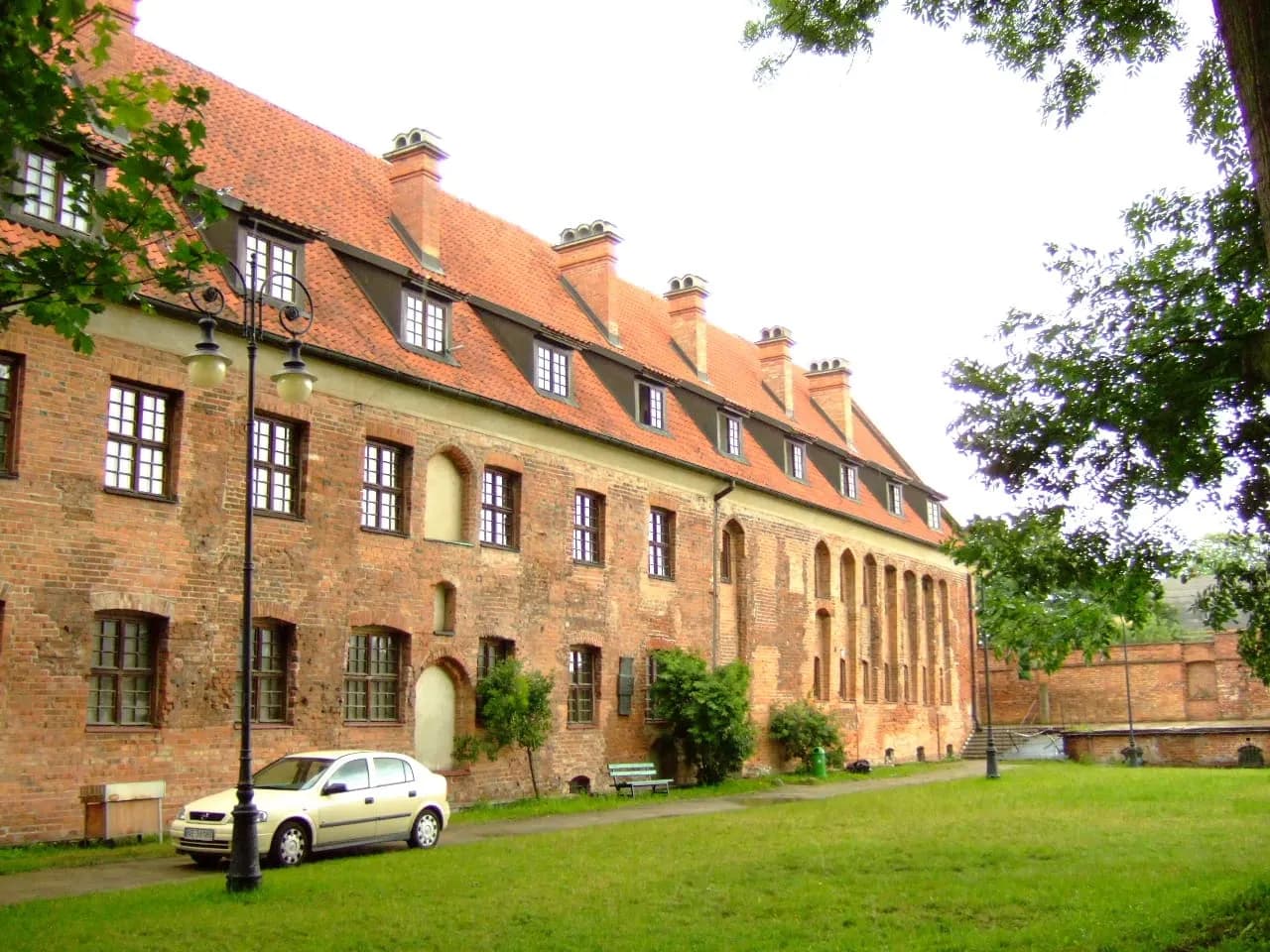
The Archaeological and Historical Museum in Elbląg preserves the city's remarkable past through archaeological discoveries spanning medieval Europe and the Baltic world.
Elbląg has been shaped by trade, craftsmanship and cultural exchange for centuries. The Archaeological and Historical Museum brings that story to life through remarkable collections that trace the city's development from the Viking Age to the modern era, making it one of northern Poland's most rewarding museums for anyone interested in history.
Founded in 1954, the museum is housed within the remains of the former Teutonic Castle complex, a setting that reflects the city's own dramatic past. Although the castle was demolished by the citizens of Elbląg during their uprising against the Teutonic Order in 1454, surviving defensive walls, medieval cellars and the former Malt House still remain. Today, together with the historic Gymnasium building, they provide the backdrop for collections that span more than a thousand years of regional history.
Unearthing the Story of Elbląg
Few museums owe as much to archaeology as the Archaeological and Historical Museum. More than three decades of excavations beneath Elbląg's Old Town have uncovered one of Poland's richest collections of medieval artefacts, transforming our understanding of how the city developed over the centuries.
These discoveries have revealed the layout of medieval streets, workshops and homes while providing an extraordinary insight into everyday life. Thousands of objects made from wood, leather, glass, ceramics and metal have survived thanks to the waterlogged conditions of medieval latrines, where they remained preserved for centuries. From musical instruments, children's toys and wax writing tablets to pilgrim badges, household utensils and tools, the collection offers an unusually personal glimpse into the lives of Elbląg's former inhabitants.
The museum also explores the city's wider historical development through documents, maps, coins and decorative arts that chart Elbląg's growth as one of the Baltic's leading trading centres. Furniture, silverwork, pewter, ceramics and other works created by local craftsmen demonstrate the prosperity and artistic skill that flourished here during the seventeenth and eighteenth centuries.
From Truso to the Hanseatic City
Among the museum's greatest attractions is its internationally recognised collection from Truso, the legendary Viking Age trading settlement discovered near Janów Pomorski by archaeologist Dr Marek Jagodziński in 1982.
For centuries, Truso was known only through the writings of the Anglo-Saxon traveller Wulfstan. Archaeological excavations eventually confirmed the existence of this thriving settlement, which connected Scandinavia, the Baltic tribes and Western Europe through extensive trade between the eighth and tenth centuries. Today, visitors can explore artefacts recovered from the site, including trade weights, coins, jewellery, tools and evidence of specialist crafts such as amber working, glassmaking, blacksmithing and goldsmithing. A reconstructed Viking house in the museum courtyard offers an additional insight into life at one of the Baltic's earliest trading centres.
The museum's collections extend well beyond the Viking Age. Permanent exhibitions explore the Goths and their influence on the Amber Road, the development of medieval Elbląg, the history of Żuławy and the cultural traditions of the surrounding region. Visitors can also admire one of Europe's largest collections of Kadyny ceramics, alongside ethnographic exhibits, historic maps, manuscripts, militaria and rare objects, including fifteenth-century spectacles believed to be the oldest discovered in Europe and an exceptionally rare fifteenth-century gittern, one of only a handful known to survive worldwide.
Spread across the former Malt House and the historic Gymnasium building, the museum offers two complementary perspectives on Elbląg's past. One focuses on archaeology and the city's medieval origins, while the other highlights art, craftsmanship and everyday life across the region, creating a rich and varied visitor experience.
Together, the museum's collections tell the story of a city shaped by trade, craftsmanship and cultural exchange across the Baltic. From the legendary port of Truso to the streets of medieval Elbląg, the Archaeological and Historical Museum invites visitors to discover how centuries of archaeological discoveries continue to reveal new chapters in one of northern Poland's most fascinating histories.
Visitor Information
Archaeological and Historical Museum - Bulwar Zygmunta Augusta 11, Elbląg
Opening Hours
Summer (1 June to 30 September)
Tuesday to Sunday: 11:00 to 17:30
Last admission: 17:00
Winter (1 October to 31 May)
Tuesday to Sunday: 09:00 to 15:30
Last admission: 15:00
Closed: Mondays
Admission
Regular: 40 PLN
Reduced: 30 PLN